Shoji
2025
3 panels, each 205 × 95 cm
tracing paper, white pencil
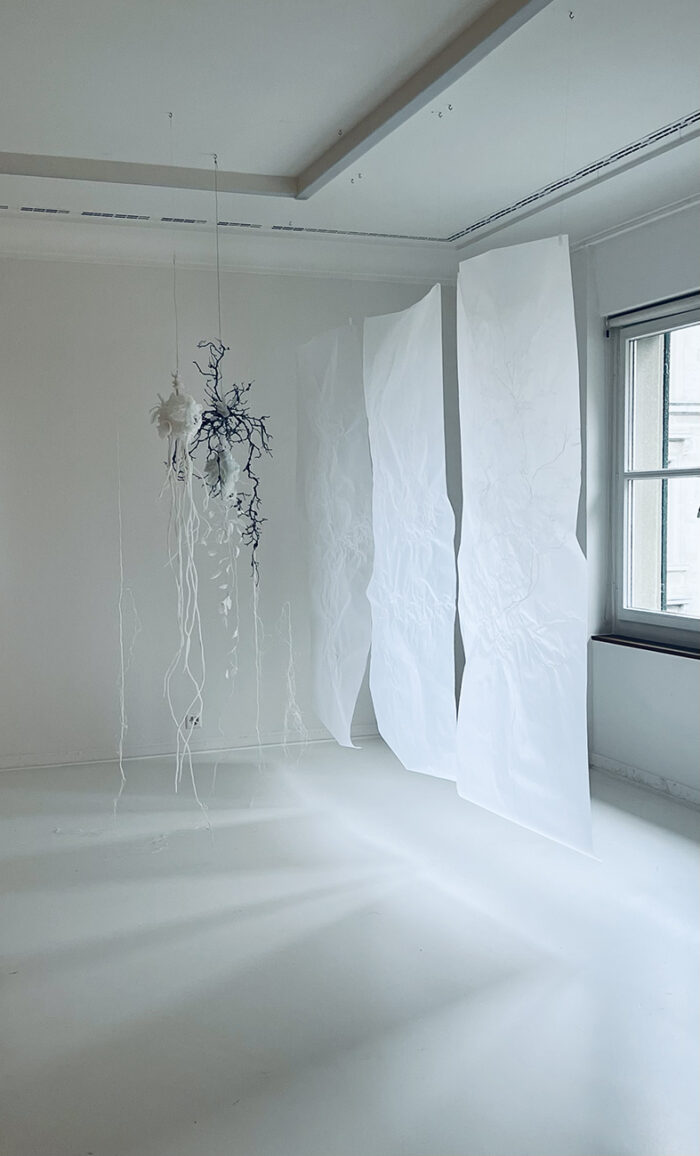
The three hanging elements do not appear as solid panels, but as partitions that both separate and connect spaces, gently modulating the light.
Like delicate membranes, the semi-transparent sheets seem suspended between states. The tracing paper acts as an intermediate matter, a threshold between the material and the immaterial.
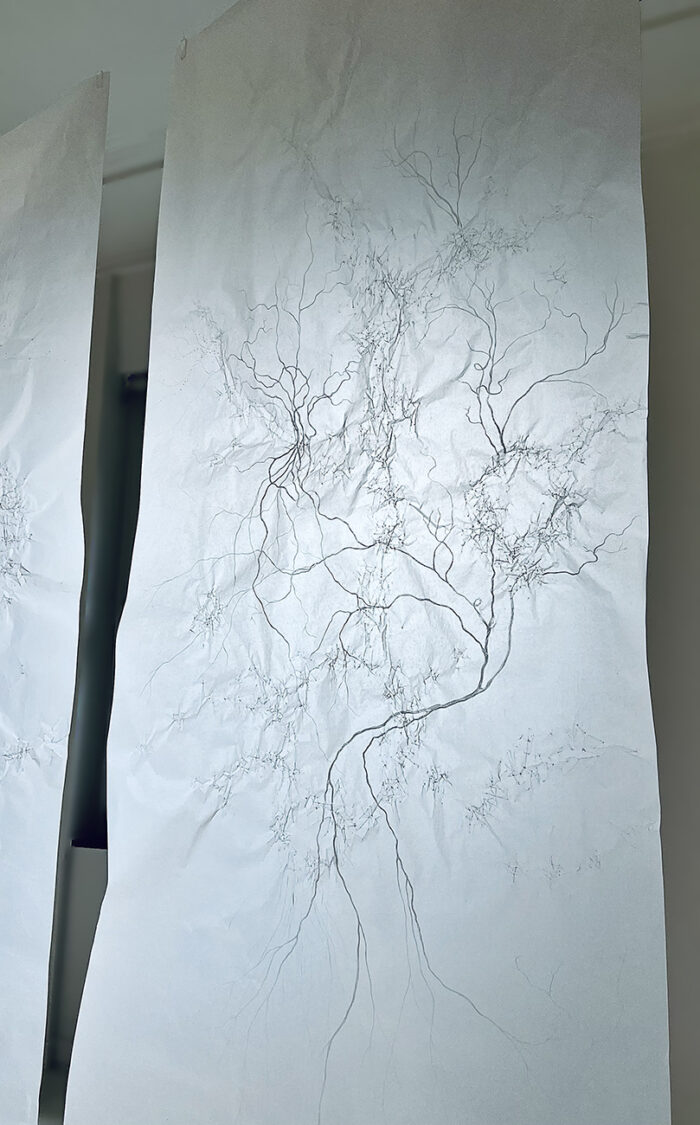
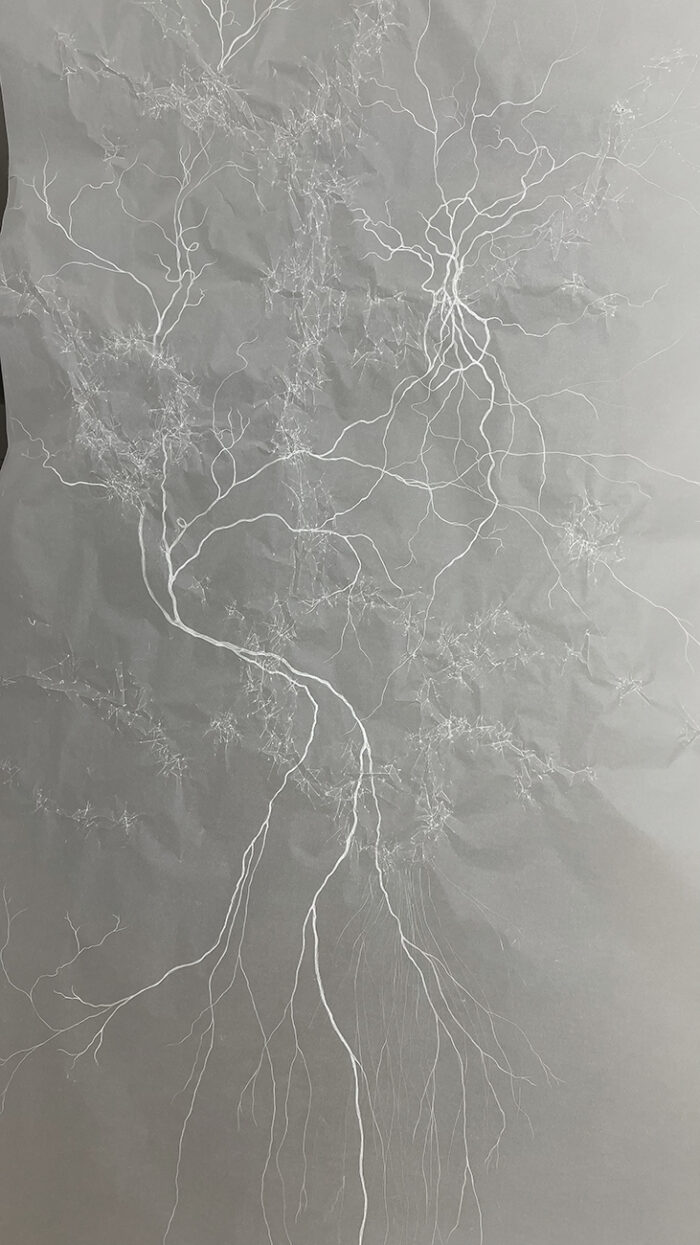
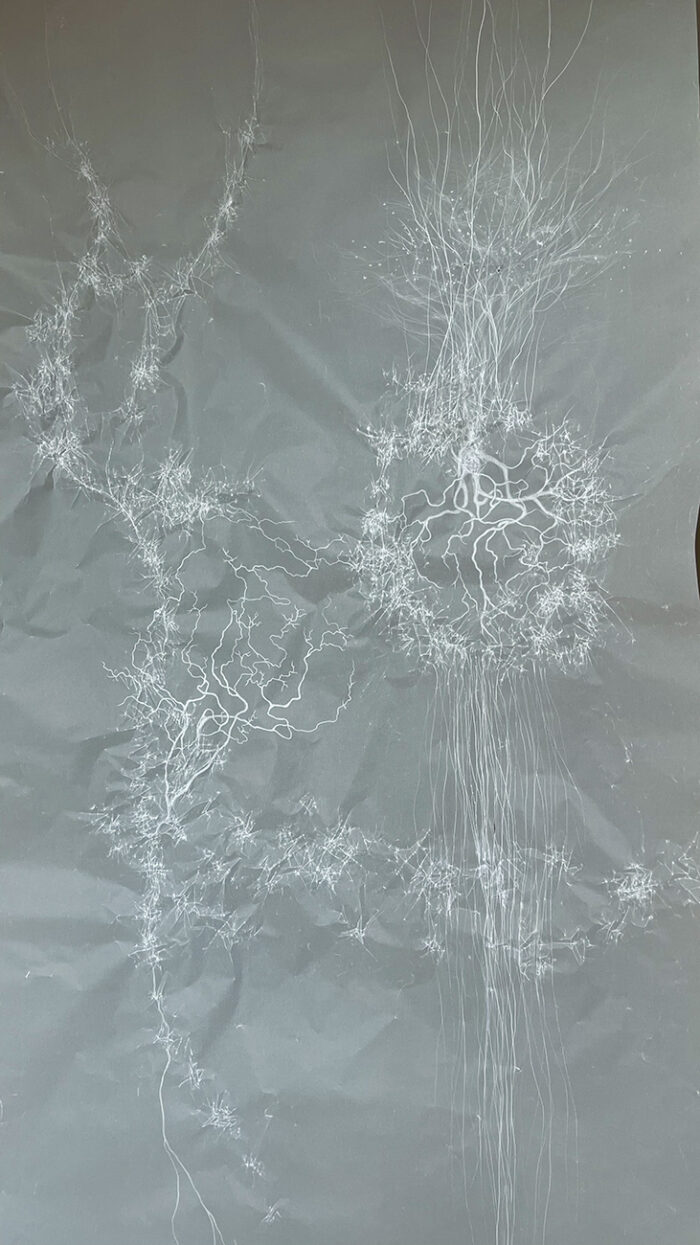
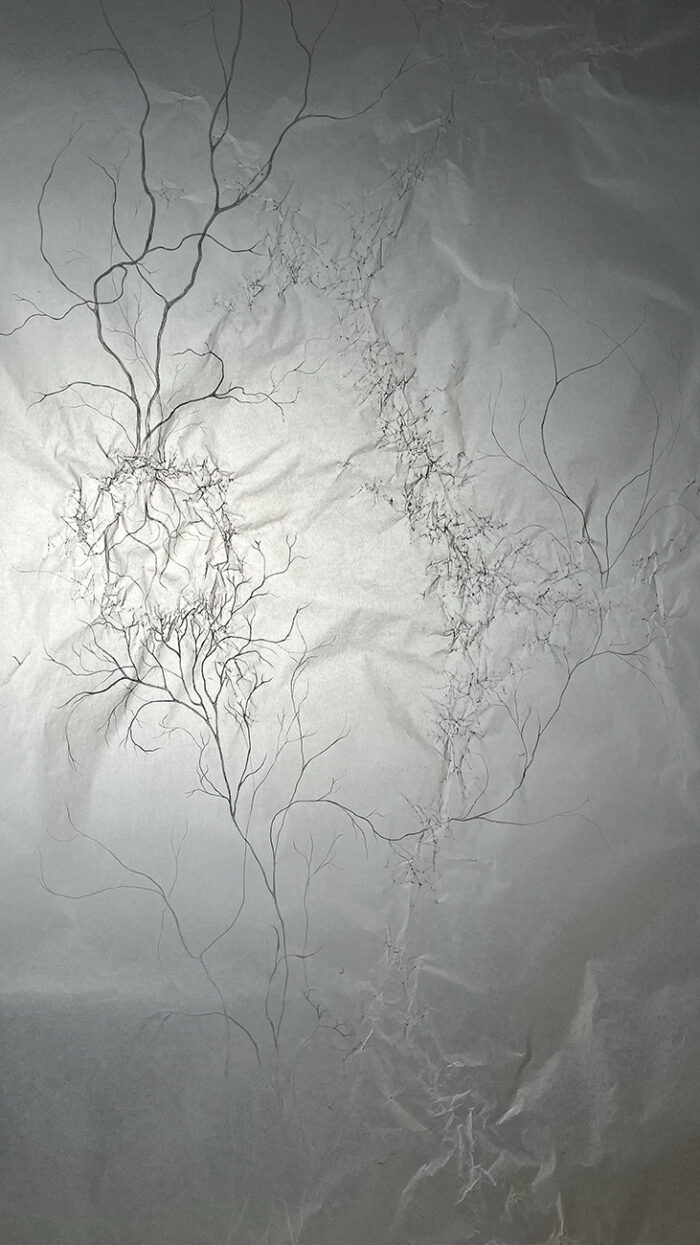
Almost imperceptible traces become visible on the translucent surfaces as they interact with light. The lines appear dark when backlit and white when illuminated from the front.
As the viewer moves through the space, the images gradually emerge and dissolve, becoming almost indistinguishable from the folds and undulations of the paper itself.
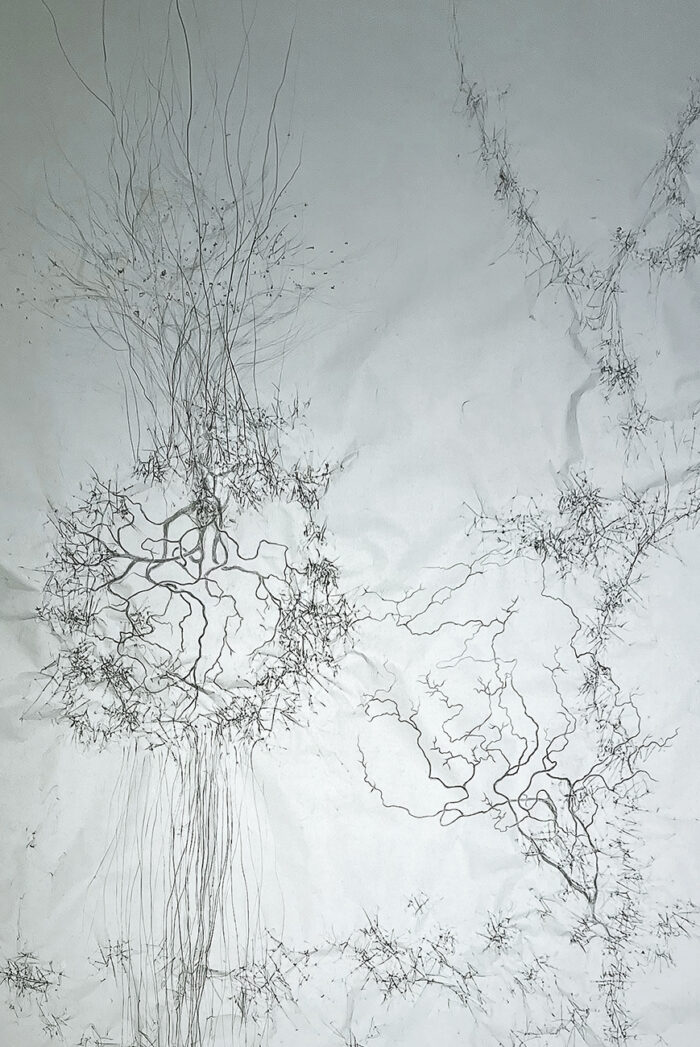
Shapes emerge from the creases and irregularities of the crumpled paper, through scratches, fissures and white pencil marks, hovering between abstraction and figuration.
The work develops through a dialogue between chance and intention, integrating the marks that arise from the unpredictable behaviour of the material with other signs and lines created by scratching, perforating, crumpling and drawing on the paper.
The gesture does not impose a shape, but receives a possibility.
The work explores the permeability of forms and perception, the shifting boundaries between light and matter, visibility and disappearance, intention and indeterminacy.
The title refers to the traditional Japanese shoji, a sliding door or partition made of translucent paper that allows light to filter into a space.
Installation view:
Now that Heaven and Earth and the Wind Are Silent, Helmhaus, Zürich, Switzerland, 2025